Eleven cameras.
One hundred twenty feet.
Only the weeds get wet.
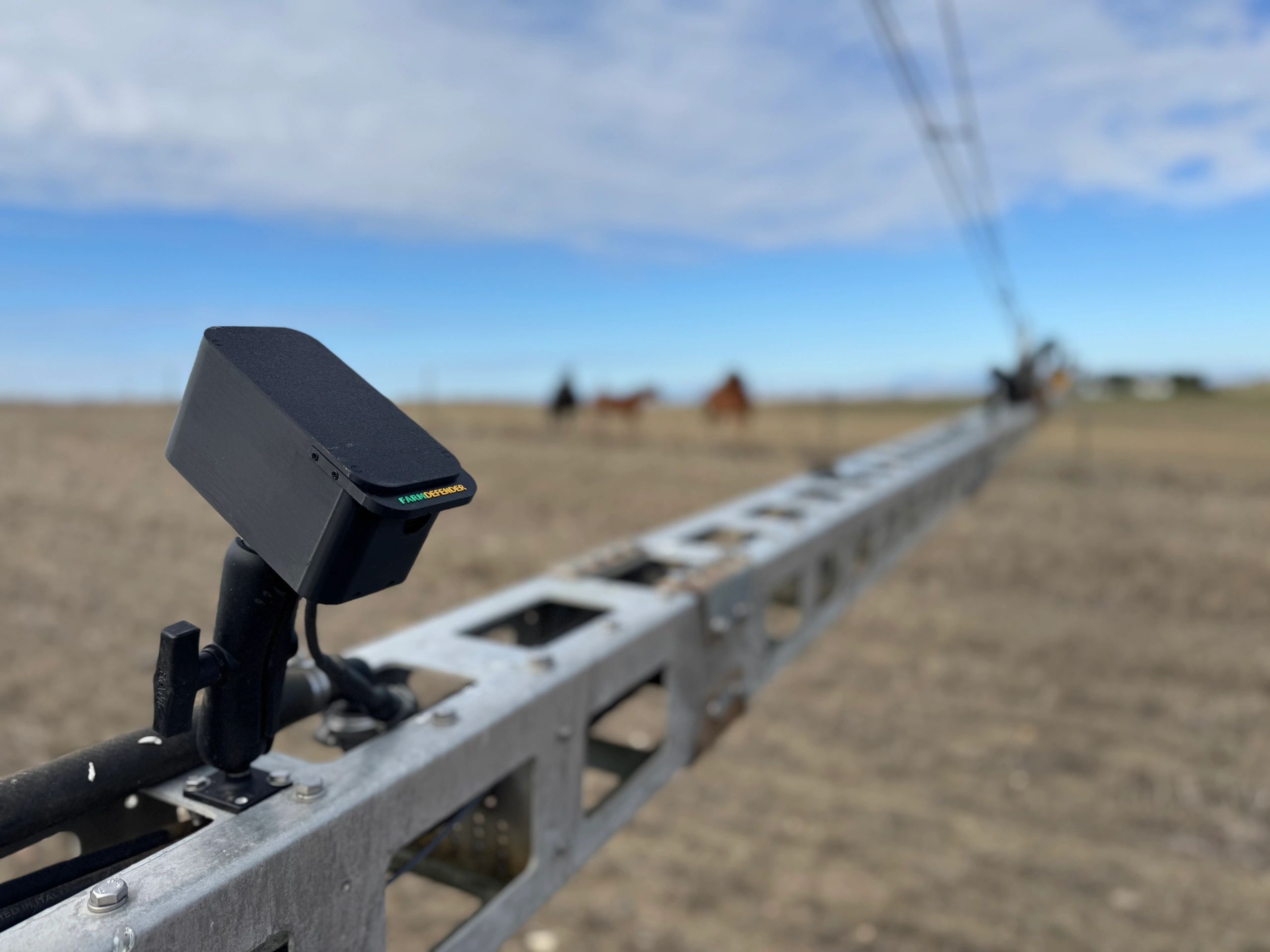
Chuck Merja farms out of Dutton, Montana, and runs FarmDefender across a 120-foot boom on his Epic Partners operation. Eleven cameras cover the full width, and the spray decision is made one nozzle at a time. The rig ran its first live spot-spray missions in July 2026 and has been working since.
The challenge
Montana dryland farming runs on a short spray window and a long list of acres. Broadcast application is the default because it's simple and it's fast — you fill, you drive, you cover the field. The cost of that simplicity is that most of what leaves the boom lands on ground with nothing growing on it.
Chuck's operation had the scale to make that waste material and the equipment to do something about it — a 120-foot boom already running per-nozzle capable hardware. What was missing was the part that decides, in real time and across the entire width, which nozzles should open.
The solution
FarmDefender puts eleven cameras across the boom, each responsible for its own strip of ground. Detection runs on the machine — no cloud round-trip, no cell dependency for the spray decision itself — and the result is a per-nozzle command issued while the boom is moving over the target.
The system drives the CapstanAg PinPoint III nozzle control already on the machine. FarmDefender makes the decision; the PinPoint hardware does the actuating. The sprayer keeps every conventional capability it had.
FarmTech built the kit, installed it, and was on the machine for the first live missions in July 2026 — eleven of eleven cameras up, spraying real weeds in the field.
A camera on every band, not a sample.
There's a shortcut in this category worth knowing about: cover part of the boom, infer the rest. It's cheaper to build and it demos well. It also means the nozzles outside the covered strip are guessing.
Eleven cameras on a 120-foot boom is what it takes to have eyes on every band at this width. When a camera goes down, the system fails safe — that band reverts to spraying rather than silently skipping weeds — and the operator knows about it.
That's the design decision behind the camera count, and it's why the number scales with boom width instead of staying fixed.
What deployed
FD-120 spot spray
Eleven cameras across a 120-foot boom, running detection on the machine and commanding nozzles individually as the boom passes over the ground.
Runs the existing nozzle control
Commands the CapstanAg PinPoint III system already on the sprayer. No replacement plumbing, no second terminal, conventional broadcast still available.
Built, installed, commissioned by FarmTech
Kit assembled in Montana, installed on the machine, and brought up in the field with our people standing on the boom — not shipped in a box with a manual.
How wide is your boom?
Camera count scales with width, and the honest answer to "will this pay on my operation" depends on what you spray and how empty the ground is. Tell us both and we'll give you a straight number.